Total Pageviews

19 February 2014

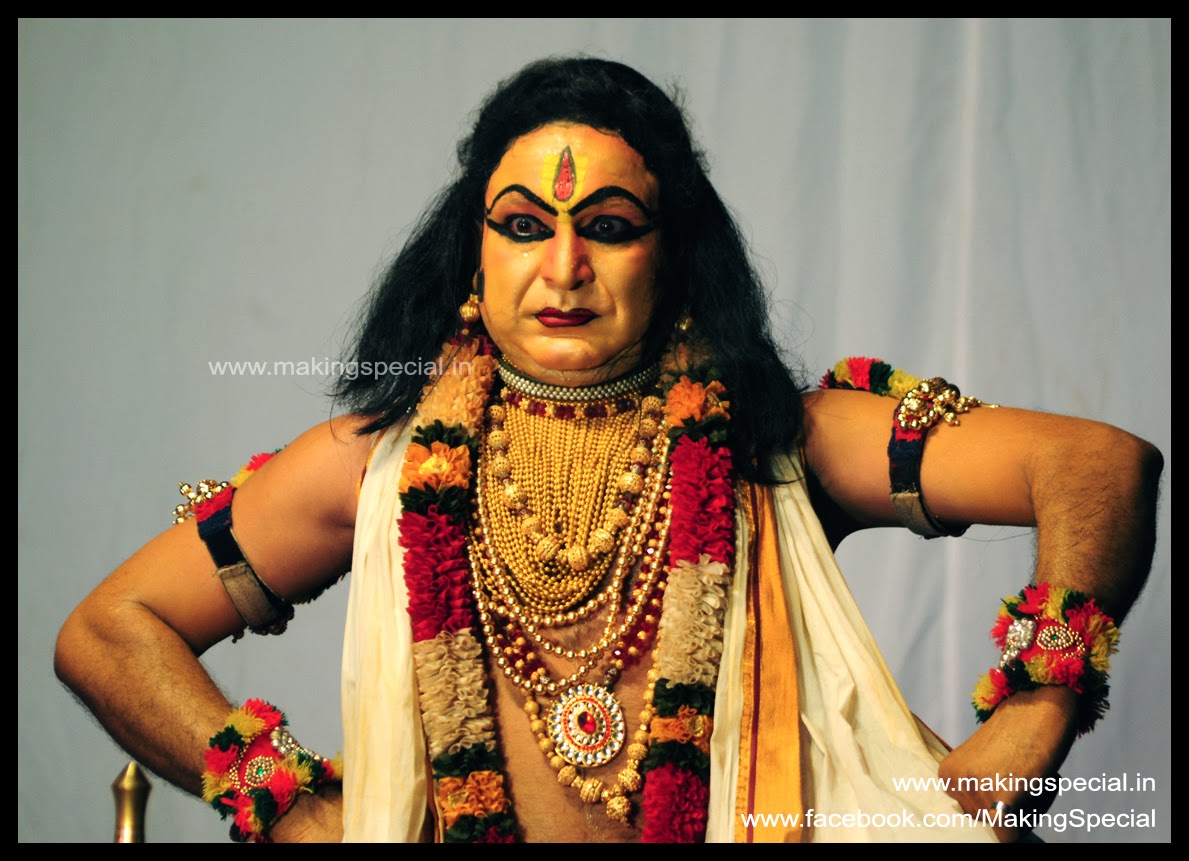
SOPANA NRITHAM
A unique dance form designed and performed by
Rajeev Krishna Chaithanya
Photo taken by : Tito Kochuveettil

Sopanam means the steps of the temple sreekovil. samyakena upanayathi ithi sopana. This is the real meaning word Sopana. This is helpful for human soul to reach paramatma. According to Bharatha Muni, the aim of natya is moksha or bhakthivivardhana.
Rajeev Krishna Chaitanya was born as the second son of Muthirapparambil R Balakrishna Pillai and Sarojini Amma on 27 May, 1965. He completed his education at Mankombu ATHS and NSS Hindu College Changanassery. Since his early childhood, he received training in classical dance. Champakkulam Mohanan Kutty Asaan was his first teacher. He received several prizes and awards for acting and dancing during the school days itself. Nedumudi Nanu Nayanar taught him the first lessons of Kathakali. His debut performance was ‘’Poothana moksha” at the Bhagavathi temple, Mankombu. He continued his study under the guidance of Mankombu Shivasankara Pillai. He was lucky enough to perform on various stages with his mentors.

During the stay in Delhi, he actively collaborated with the International Kathakali Centre in different projects. In 1994, he reached Haridhwar in Himalaya and received Mandhradeeksha from Swami Ganesanandapuri. He enrolled in the educational institutions at Haridhwar and Kaasi for higher learning in Sanskrit. Later, since 1997 to 2004, he learnt Sanskrit from Payyannur Ramanthali Krishna Panickar in the gurukula way. During this period, he very actively worked with Swami Krishnanda Bharathi. Owing to certain domestic responsibilities, he was then forced to stay with his parents, and yet he continues the Vedanta studies, Sadhana and teaching. Having invented the new dance form called Sopana nritha, he performs on stages inside and outside Kerala. He has been to the Himalayas for 14 times. He writes articles and poems on the subjects related to Vedanta, and teaches Vedanta.




© titofoto


๐‘ƒ๐‘™๐‘’๐‘Ž๐‘ ๐‘’ ๐‘“๐‘œ๐‘™๐‘™๐‘œ๐‘ค ๐‘œ๐‘› ๐‘š๐‘œ๐‘Ÿ๐‘’ ๐‘๐‘–๐‘๐‘ก๐‘ข๐‘Ÿ๐‘’๐‘ 


15 February 2014

Nishagandhi Festival 2014
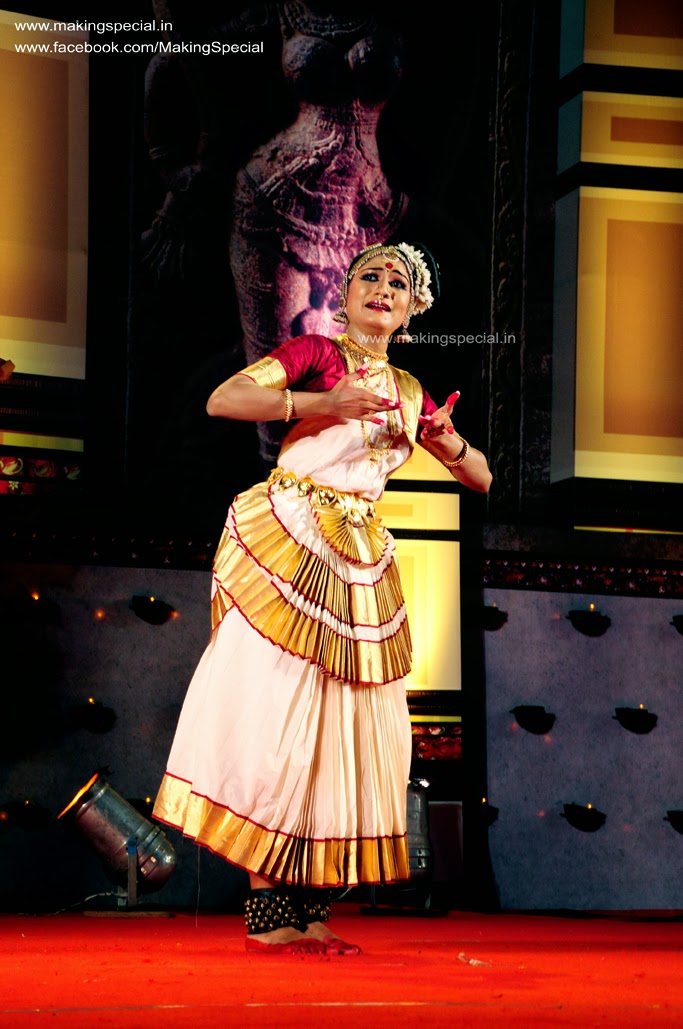
Mohiniyattam -Likha Rajan
Photo taken by : Tito Kochuveettil

The Nishagandhi is all set to bloom again. For seven evenings starting 20th January, the exotic fragrance of classical Indian dance and music will permeate the cool balmy air of Kanakakkunnu and give new life to Thiruvananthapuram, the land of Lord Anantha. Come, join this celebration of art.  
Mohiniyattam, also spelled Mohiniattam (Malayalam: เดฎോเดนിเดจിเดฏാเดŸ്เดŸം), is a classical dance form from Kerala, India. Believed to have originated in 16th century  it is one of the eight Indian classical dance forms recognised by the Sangeet Natak Akademi. It is considered a very graceful form of dance meant to be performed as solo recitals by women. Mohiniyattam was popularised as a popular dance form in the nineteenth century by Swathi Thirunal, the Maharaja of the state of Travancore (Southern Kerala), and Vadivelu, one of the Thanjavur Quartet. Swathi Thirunal promoted the study of Mohiniyattam during his reign, and is credited with the composition of many music arrangements and vocal accompaniments that provide musical background for modern Mohiniyattam dancers. The noted Malayalam poet Vallathol, who established the Kerala Kalamandalam dance school in 1930, played an important role in popularizing Mohiniattam in the 20th century.
The term Mohiniyattam comes from the words "Mohini" meaning a woman who enchants onlookers and "aattam" meaning graceful and sensuous body movements. The word "Mohiniyattam" literally means "dance of the enchantress". There are two stories of the Lord Vishnu disguised as a Mohini. In one, he appears as Mohini to lure the asuras (demons) away from the amrita (nectar of immortality) obtained during the churning of the palazhi (ocean of milk and salt water).
In the second story Vishnu appears as Mohini to save Lord Shiva from the demon Bhasmasura. The name Mohiniyattam may have been coined after Lord Vishnu; the main theme of the dance is love and devotion to God, with usually Vishnu or Krishna being the hero. Devadasis used to perform this in temples. It also has elements of Koothu and Kottiyattom. Mohiniyattam is a drama in dance and verse.
The dance involves the swaying of broad hips and the gentle movements of erect posture from side to side. This is reminiscent of the swinging of the palm leaves and the gently flowing rivers which abound Kerala, the land of Mohiniyattam. There are approximately 40 basic movements, known as atavukal.
The three pillars — Sri Swathi Thirunal Rama Varma, Sri Vallathol Narayana Menon (a poet and founder of the institution, Kerala Kalamandalam) and Smt. Kalamandalam Kalyanikutty Amma (considered “the mother of Mohiniyattam”) — contributed to the shaping out of the contemporary Mohiniyattam during the later part of the 20th century. Guru Kallyanikutty Amma cleared the mythical mystery behind the name of this dance form and gave it the most convincing explanation based on truth, social and historical evolution, interpreting Mohiniyattam as the dance of a beautiful lady than that of a mythical enchantress from heaven.

03 February 2014

Thiruvananthapuram Central KSRTC Bus Terminal Photos
 Photo taken by : Tito Kochuveettil

The Rs.65-crore modern bus terminal complex of the Kerala State Road Transport Corporation (KSRTC) that is being commissioned on Monday will be more than an alighting and boarding point for passengers. Theatres, food courts and commercial space are part of the structure.
Chief Minister Oommen Chandy will formally inaugurate the 12-storey complex, in the presence of Ministers and people’s representatives.
Although project officials say the complex will transform the prevailing concept of a bus station, passengers will have to wait for some more time to see the commercial hub in full swing.
Work on a culvert being undertaken as part of the City Road Improvement Project to check flooding in Thampanoor area and the work on the KSRTC yard have to be completed.
Civil works and painting work have been completed and formalities to lease out the building are in full swing, sources say.
As many as 145 cars and 250 two-wheelers can be parked in the basement, which also houses elevators and toilets.
The bus bay, passenger platform, and ticket counters are on the ground floor. Twenty-five buses can be parked at the bus bay at a time and five can be parked to allow alighting of passengers.


The KSRTC has conducted a trial run to finetune the entry and exit of buses from the NH. The terminal can handle 2,500 to 3,400 schedules a day. Health Minister V.S. Sivakumar will flag off the first bus service.
Most floors have commercial space, central lobby and parking facilities. The third floor will house theatres and two food courts.
A total of 339 cars, 450 two-wheelers and 40 autorickshaws can be parked, including in the open ground, on the complex. Ramp facility has been provided at the parking lots in the building.
From the fourth floor, space has been provided for setting up offices and other institutions. A four-storey administrative block has been set up behind the terminal for the KSRTC and a front office on the ground floor will take care of the bus operations.
Work on the project, implemented on a build, operate, transfer (BOT) mode jointly by the KSRTC and KTDFC, started on March 22, 2012. The KTDFC will take up the upkeep of the bus terminal complex.

Thiruvananthapuram Central KSRTC Bus Terminal
Photos @ Night


Call @ 94956 40468